

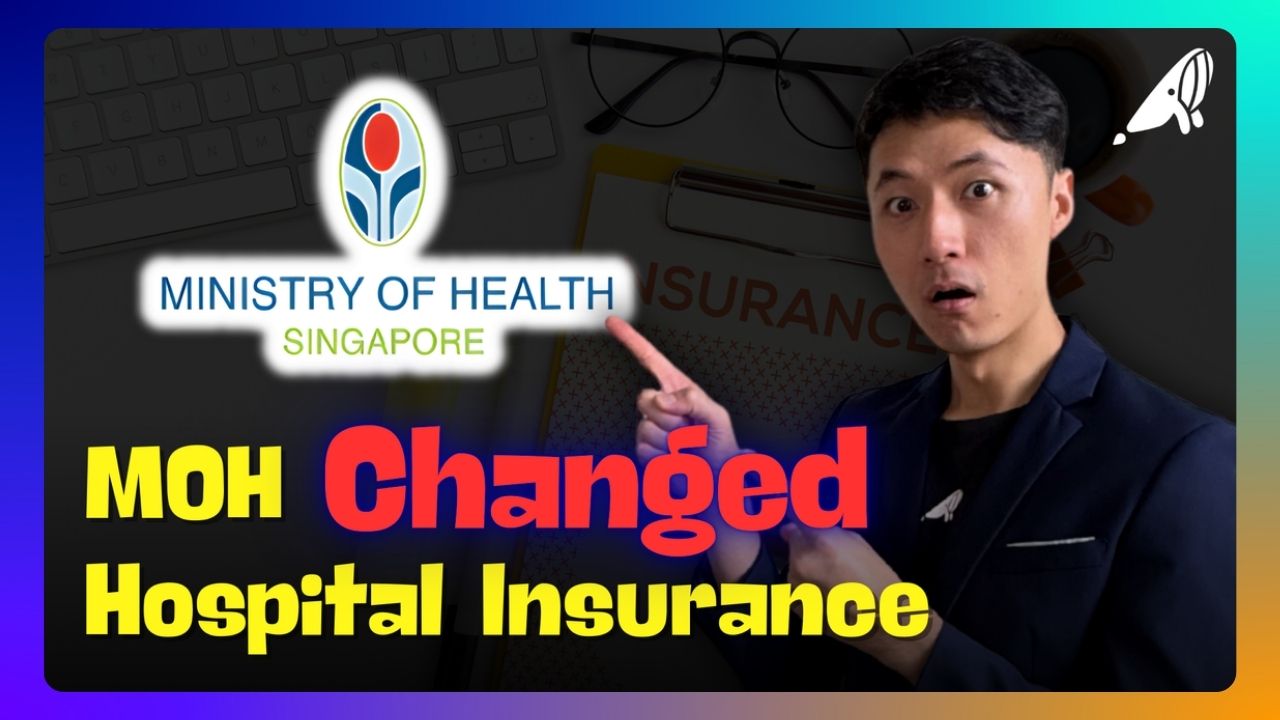
Recently, Health Minister Ong Ye Kung revealed that over 100,000 Singaporeans have downgraded or dropped their Integrated Shield Plan (IP) riders.
That number shocked many. After all, hospitalisation insurance was supposed to give peace of mind — so why are so many people walking away from it?
Let’s unpack what’s really going on and whether your own plan still makes sense.
1. Why Everyone’s Talking About It Again
Minister Ong shared that people with riders, the add-ons that reduce your out-of-pocket costs, tend to claim 1.5 times more than those without.
At first glance, that sounds fair. You pay for more coverage, you claim more. But those same policyholders also rack up hospital bills 1.5 times higher.
Combine both, and insurers face fast-rising claim costs. To keep the system sustainable, they raise premiums, which then pushes more people to downgrade or cancel their plans. It’s a tough cycle to break.
2. How Health Insurance Really Works (Without the Jargon)
Think of an Integrated Shield Plan like a shared rainy-day fund when someone needs to be hospitalized. Everyone pays into a pool, and when one person falls ill, the pool covers the bill.
But when too many people draw too much from it, especially for costly private hospital care, the pool starts drying up faster than it can refill.
Insurers react the only way they can: Increase premiums.
It’s the same logic as your household budget. If expenses keep going up, you either spend less or earn more.
That’s why older policyholders are hit hardest. For a 70-year-old, private-ward premiums can now exceed $10,000 per year.
Also, as we aged, the higher the probability of being hospitalized. Higher probability = Higher Premiums to pay.
3. “Money’s Worth” Thinking Misses the Point
Minister Ong mentioned a claim-to-premium ratio:
If you pay $4,000 in premiums and receive $18,000 in claims, that’s a 4.5x return.
Sounds like a good deal, but here’s the flaw. You can’t predict when or how much you’ll claim.
Insurance isn’t an investment; it’s protection.
As I explains in the video:
“For hospitalisation insurance, it’s never worth it. Because to make it worth it, you’d have to be sick, and nobody wants that.”
The real question isn’t “Did I get my money’s worth?”
It’s “Would I be financially okay if something big happened tomorrow?”
4. Why So Many Are Downgrading
For most, it’s about cost, but there’s also emotion involved.
Some older Singaporeans choose to downgrade simply because premiums no longer feel reasonable. Others realise that they may not need private hospital care at all.
I shared one story that stuck: a client who could afford an A-ward stay but still chose B2. Why?
“I don’t like to be alone in a hospital room,” she said.
Health decisions aren’t always logical. They’re personal. And that’s what makes insurance and financial planning tricky.
5. The Policy Angle: Is There a Bigger Agenda?
Half of those with private coverage end up in public subsidised wards, according to Minister Ong.
His takeaway: maybe MediShield Life, the basic national plan, is good enough for most Singaporeans.
However, if more people move to public hospitals, government subsidies rise. That means higher public spending… and possibly higher taxes.
He even cautioned,
“When we need to raise taxes, we’ll tell you, because we need the revenue to expand the healthcare system.”
So this isn’t just about insurers. It’s about how Singapore balances healthcare sustainability with personal choice.
6. The Real Issue: Awareness, Not Insurance
Instead of blaming the system, let me ask you a question:
“Have you ever bought things you don’t need, or don’t even have time to use?”
We always find money for what we want, not what we need.
The same applies to insurance. It’s not about whether IPs are bad; it’s about whether they fit your overall financial picture.
That’s why GoodWhale created Buddy, our free AI-powered expense tracker that helps you see exactly where your money goes.
Whether it’s your kopi, Grab rides, or insurance premiums, awareness is the first step to financial control.
Watch the full video here:
I covered this in more detail in our latest GoodWhale video. Watch the full breakdown here:
JiaXuan’s Take
Hospitalization insurance isn’t about “beating the system.”
It’s about protecting yourself without overpaying.
If you can comfortably afford private coverage, keep it.
If you can’t, downgrade. But do it intentionally, not out of fear.
And above all, focus on what you can control: your health habits, lifestyle, and spending awareness. Those make the biggest difference over time.
Take Control Before the Next Premium Hike
Before you adjust your coverage, understand your cash flow first.
Try GoodWhale Buddy, your personal AI money butler that tracks spending automatically through text, photo, or voice.
Now available in Whatsapp, Telegram and LINE.
Whatsapp: https://click.goodwhale.com/gw-buddy-wa
Telegram: https://click.goodwhale.com/gw-buddy-telegram
LINE: https://click.goodwhale.com/gw-buddy-line









[…] If you missed our earlier breakdown on whether these plans are still worth it, you can read it here:👉 Are Integrated Shield Plans Still Worth It? […]