
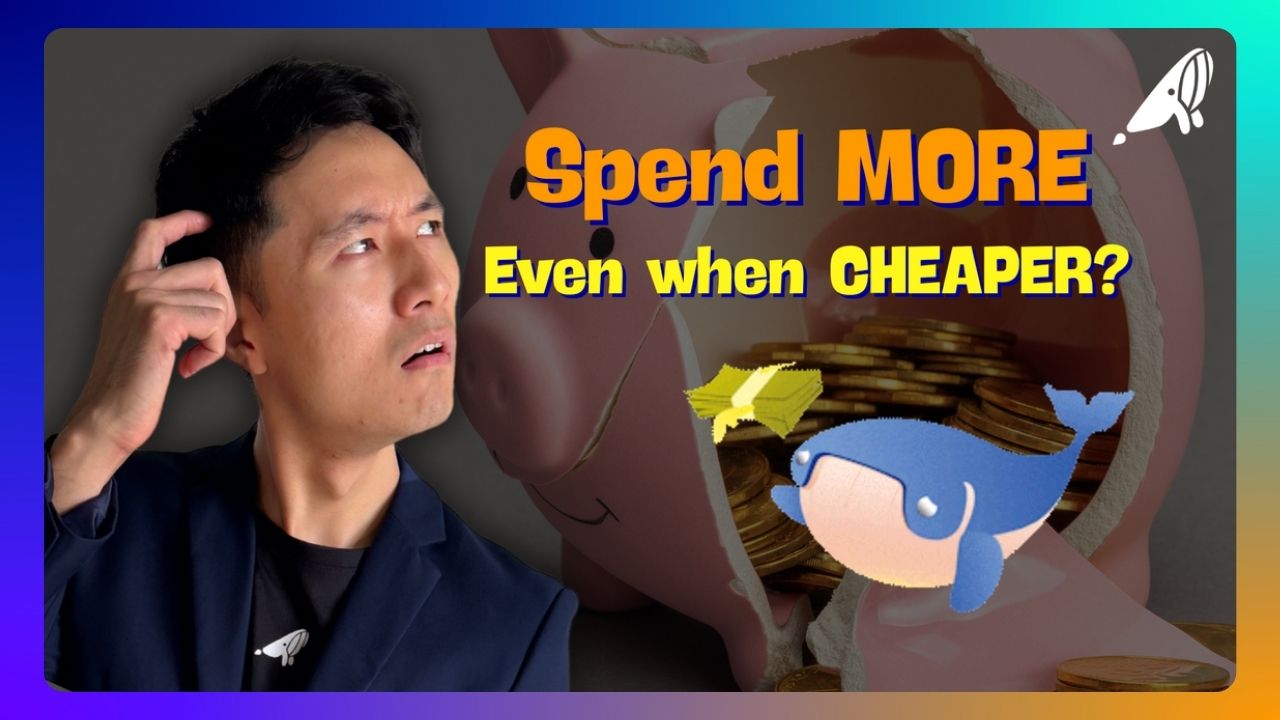
Save Money From Discounts, BUT You became POORER?!
Many Singaporeans wonder why the middle class feels poor even though everything seems cheaper, more convenient, and full of discounts. You use promo codes, catch flash sales, and stack cashback, yet your bank account still feels the same. So the question is, what is really happening?
Why does it feel like no matter how many discount codes you apply… how many cashback hacks you follow… or how many “worth it” sales you catch…
Your bank account still ends up empty?
Even though things seem cheaper and more convenient today, the middle class still feels poorer. I recently broke this down in a video. If you prefer watching instead of reading, here’s the full breakdown:
👉 Watch the video here:
Now let’s go deeper.
The Singapore Discount Trap That Quietly Makes You Spend More
We all love discounts.
However, this is exactly where the trap begins.
Shopee flash sale.
GrabFood promo code.
11.11. 12.12. Payday sale.
Even “Random Tuesday Sale” also exists.
When you see 40 percent off, your mind automatically goes,
“Wah, confirm good deal. Must buy!”
Instead of buying one, you buy two.
You think you saved twelve dollars.
In reality, you ended up spending eighty.
As a result, discounts encourage you to spend more, not save more.
This is one of the first reasons the middle class starts feeling poorer.
Singapore Didn’t Get More Expensive. Spending Became Too Easy.
The real issue is not inflation.
It is not your salary nor is it even GST.
The deeper problem is that spending became too painless.
Previously, we used to hand over physical cash.
Every note given felt like a tiny “ouch”, so we naturally paused before buying.
Now, the entire experience has changed.
Today, it is simply:
Tap.
Scan.
Swipe.
Done.
PayWave, PayNow, GrabPay, Apple Pay. Even hawker centres have QR codes everywhere.
And even primary school kids use Smart Buddy. They tap and walk without seeing money leave their hands. Because of that, the younger generation grows up without understanding the feeling of spending.
Naturally, when money stops feeling real, we stop treating it like money.
Before I started using GoodWhale Buddy to track my expenses, I always felt shocked when my credit card bills arrived. This is a huge reason why the middle class feels poor.
Cheap Things Make Us Spend More in Singapore
Here’s where it gets even more interesting.
“Cheap” things usually end up making us spend more.
1. Budget airlines = More travel
In the past, travel was a luxury.
These days, we hear:
“I stressed, need go BKK.”
“JB only? Not enough.”
“Eh flights cheap lah, book first.”
“Yen drop? Must go Japan!”
Ironically, cheaper flights made Singaporeans travel more, which ultimately increases spending.
(If you’re planning your next trip, check out my article on the 4-step system to plan your holiday budget to avoid overspending.)
2. Salary increase = Lifestyle creep
Nobody wants stagnant pay.
So when a 10 percent raise comes, it feels amazing.
However, your GrabFood, Starbucks, Shopee and travel spending also magically increase.
It’s not irresponsibility. It’s psychology.
More income reduces friction, which makes spending easier.
3. Discounts = Overspending
A 40% doesn’t save you money. It tempts you to buy more.
You don’t buy because you need it. You buy because the discount “gave permission.”
4. Buy Now Pay Later (BNPL) = Fake affordability
Why pay $50 now
when you can pay $12.50 four times?
Because it feels lighter, most people don’t think twice.
However, the total remains $50.
Even worse, repeated BNPL purchases stack up quietly.
Before you know it, repayments exceed your actual income.
That’s how debt begins.
By the time you add everything up, it’s shocking! That’s when you start owing more than your income. And that’s when horror stories start coming in.
This All Comes From an Old Economics Problem
Interestingly, this modern problem has roots in the 1800s.
Britain feared it would run out of coal.
Engineers created a steam engine that used less coal and cost less to operate.
Everyone believed this would save their coal supply.
Instead, because it became easier and cheaper to use,
coal consumption exploded.
This is known as Jevons Paradox. When something becomes cheaper or more convenient, people consume MORE of it, not less.
And today, Singapore is living this exact scenario.
Convenience, efficiency, & promotions everywhere.
Yet the middle class feels poorer, not because life got more expensive,
but because spending became invisible.
Why the Singapore Middle Class Feels Stuck
Everything you feel makes sense:
You earn more, but don’t feel richer.
Things get cheaper, but life feels more expensive.
You spend more, but enjoy less.
This means the problem is not your income,
but your awareness.
When you cannot see where your money goes, you naturally feel poor even if you’re not irresponsible.
But because modern life removed all friction.
How to Break the Cycle (Realistic Singapore Edition)
The good news is this.
You don’t need to cut everything. You don’t need to be extreme. You just need to add small amounts of friction back.
Let’s start small. Here are 4 things you can do to stop these unnecessary splurges:
1. Delay 24-48 hours
If you still want it by then, buy it. Most “urgent” wants disappear.
A good question to ask yourself:
“Do I really need this, or do I already have something similar?”
2. Use a separate spending account
This is one of the most effective habits.
If all your money sits in one account, everything feels “affordable.”
However, when your spending account runs out, it runs out.
No guilt. No shock.
Just rebuild from there for the next month.
3. Track daily, not monthly
Tracking daily builds awareness.
Tracking monthly usually builds denial.
It’s the small $10 to $20 transactions that drain your wallet.
There’s a saying:
“one chopstick is easily broken while a bundle of chopsticks are not”
In the case of money, every cent counts. $1 can be small but spending 1000 $1, it is a lot!
So don’t downplay anything that is $0.99.
It’s usually the small ones that kills.
4. Use a tool that makes spending visible
That’s exactly why we created GoodWhale Buddy.
A simple, free tool on WhatsApp, Telegram, or LINE
to track spending without the need to download another app.
When your spending becomes visible,
your decisions instantly improve.
Check out GoodWhale Buddy here:
Whatsapp: https://click.goodwhale.com/gw-buddy-wa
Telegram: https://click.goodwhale.com/gw-buddy-telegram
Line: https://click.goodwhale.com/gw-buddy-line
Are Discounts Making You Poorer?
Surprisingly, yes. In many cases.
Discounts make everything feel “worth it”,
which encourages you to buy more, not less.
Convenience removes friction.
Friction protects your wallet.
Once you make your spending visible again,
you feel richer without earning a single cent more.
👉 Watch the full breakdown:
A Final Thought
As Singapore becomes more cashless, more convenient, and more frictionless…
Do you think people will start spending less?
Or will convenience slowly make us poorer without noticing?
I would love to hear your thoughts.










Leave a Reply