
Unity: The Power of Community
Unity (NYSE:U), is a platform that provides tools and services for creating and monetizing video games and interactive content. Their recent journey is a testament to the immense power a community holds. Communities can be a driving force for good in a company, but they can also be a catalyst for its downfall if their trust is broken. Unity’s recent experience underscores this delicate balance. James M. Whitehurst, Unity’s new CEO, who took the reins in August, introduced a controversial “Runtime Fee” pricing model based on game installs in September 2023.
The response from the game development community was swift and fierce. Developers worldwide were incensed, threatening to abandon Unity for alternative engines like Unreal Engine and Godot. This was a pivotal moment for Unity; the threat of developers jumping ship was not just a blow to Unity’s reputation but a direct threat to its profitability. The company’s stock took an immediate hit, plummeting by around 15-20%.

Source: Google
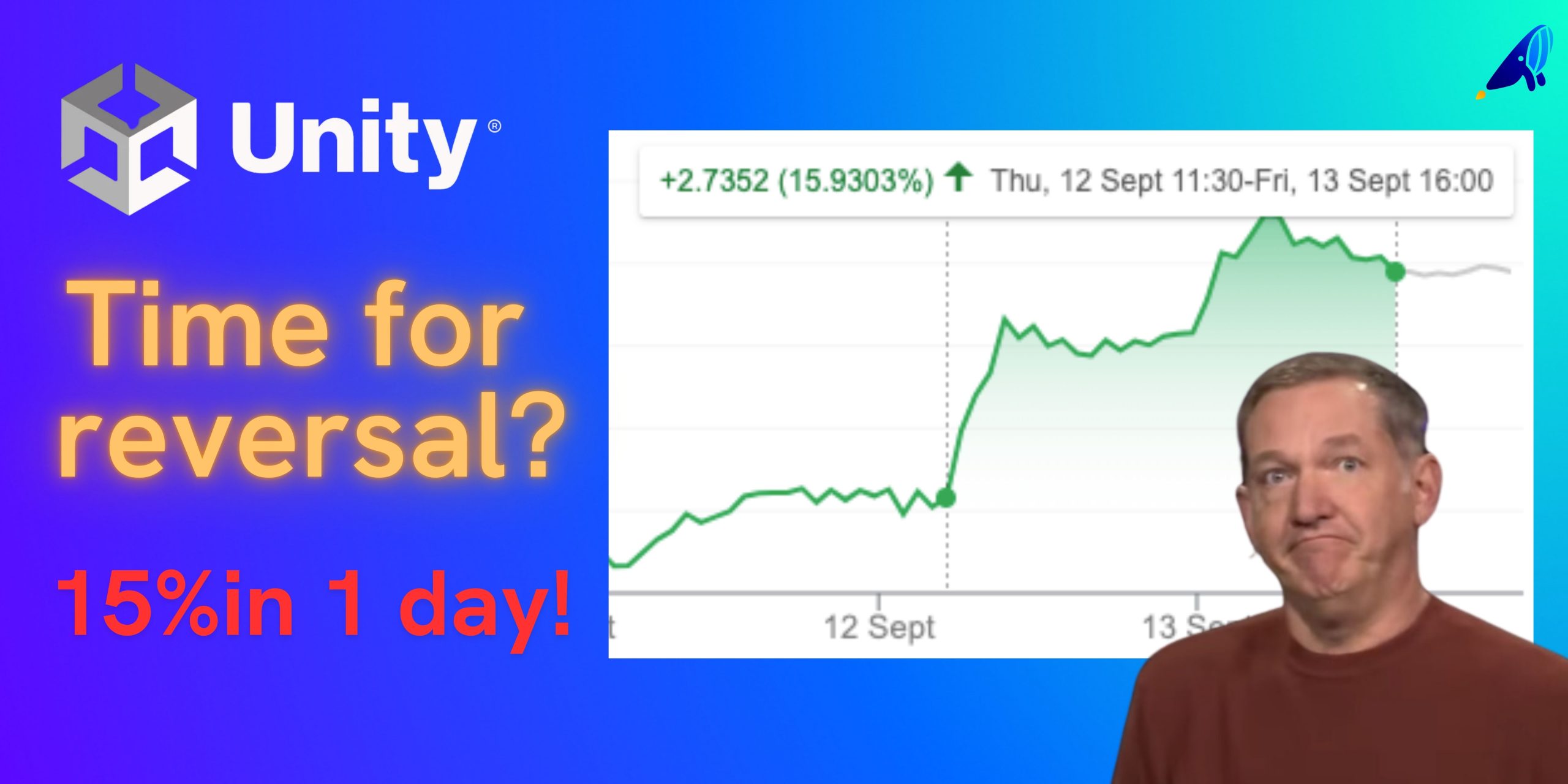
Unity had to act fast to prevent further damage. The company announced the cancellation of the “Runtime Fee,” which led to a remarkable 15% spike in its stock. This decision wasn’t just about reversing a policy—it was about recognizing where the true power in the gaming ecosystem lies.

Source: Tradingview

Source: Google
Developers and Investors Rejoice for Unity!
The reversal was a win for both developers and investors. Developers, who were familiar and comfortable with Unity’s previous seat-based subscription model, welcomed the move. This shift not only mended strained relationships but also brought stability to Unity’s ecosystem. By returning to the seat-based model, Unity ensured a more predictable revenue stream. Unlike the “Runtime Fee,” which created uncertainty, seat-based subscriptions offer a fixed fee for each “seat” or license used by developers, providing clarity and financial predictability.
Unity: More Money Lies in Grow Solutions, Not Create
Unity’s financials reveal an interesting insight: over 60% of their revenue in the last twelve months came from their “Grow Solutions” segment. This indicates that Unity’s real growth potential lies not just in creating tools but in helping developers grow and monetize their games. It’s a strategic realization similar to what Netflix has found with its ad-supported plans being more profitable than non-ad plans. Unity’s goal is to attract as many developers as possible to its platform, making it easy and affordable for them to get started. Once developers are on board, Unity can leverage its “Grow Solutions” to increase revenue.

Source: Finchat
Who Holds More Power? Developers or Unity?
The events surrounding the “Runtime Fee” debacle have made one thing clear: in the gaming industry, the real power lies with the developers. With alternatives like Unreal Engine and Godot, developers have choices. Those who haven’t yet started their projects can easily pivot to other platforms, while those mid-development face higher switching costs due to retraining and migration expenses. Unity’s move to revert to the old pricing model was a strategic decision to retain and possibly regain developer trust and loyalty.
Unity Insider Movements and Red Flags
While the recent policy change resulted in a positive market reaction, it also raised some eyebrows regarding insider actions. The Felix, an insider at Unity, recently sold a portion of his shares following the stock’s upward movement.

Source: Tradingview
While his recent sell-off is a small fraction of his overall holdings, it still prompts questions.
One of them was his previous sale of company shares less than one month ago. On August 23, Felix had liquidated over 16,855 shares for $300,525. What is happening?!
What makes it more intriguing is his track record; Felix has a history of not staying too long at companies, with stints at AppNexus, Zynga, Hawaiian Airlines, and Oliver Wyman lasting three years or less.

Source: Linkedin
However, his tenure at Unity has been over seven years. Whether this sale is a signal of reducing concentration risk or foreshadowing an exit remains to be seen. Nevertheless, this insider activity doesn’t appear to be an immediate red flag, especially with the management showing a clear intent to mend developer relations.
Should You Buy?
This scenario is an excellent case study on the power dynamics between a company and its community.
While the recent 15% surge in Unity’s stock price seems enticing, it is important to approach with caution.
The company is making strides in the right direction by listening to its community, a move that aligns with GoodWhale’s belief in sustainable and community-driven business practices.
However, the actions of yesterday will determine the results in the future. While it is challenging to see the full effect current projects will likely be using Unity as it would otherwise be too costly to switch providers halfway into production.
Given the volatility and recent insider activities, I suggest monitoring Unity for more concrete signs of an upward trend before considering it a solid investment opportunity. As a non-specialist in this area, I couldn’t appreciate Unity’s products against their competitors nor their weakness. As such, if you are a game developer or a user of Unity/ Godot/ Unreal, I hope we can have a better discussion in the GoodWhale Community!
The Bottom Line
Unity’s experience serves as a powerful reminder of the influence and significance of community feedback. The company’s decision to reverse its pricing strategy in favor of a more developer-friendly model demonstrates a willingness to listen and adapt—a trait that bodes well for its long-term prospects. For investors, this article is a case study in understanding the power dynamics within industries heavily reliant on community trust and engagement.
At GoodWhale, we are committed to supporting you in your investing journey. If you want insights and thoughts from others to strengthen your investment thesis, we are here! If you are looking for a high value, low cost support, we are here! For just USD 9.90, we have weekly live session on Tuesdays, where we discuss key market news and addressing to all your questions 😉
Join our weekly sessions now! >> Join here!
Just in case you missed last week’s wealth pulse, here’s an article summary of it: Click here!





Leave a Reply