

How money habits feel automatic, and why awareness matters more than discipline
Most people believe a money habit is something they consciously choose.
If they could just be more disciplined, more consistent, or more motivated, their money habit would improve. When spending feels out of control or saving never sticks, the assumption is often that something is wrong with the person.
But this article offers a different perspective.
A money habit is rarely chosen in isolation. In most cases, money habits are absorbed, not chosen.
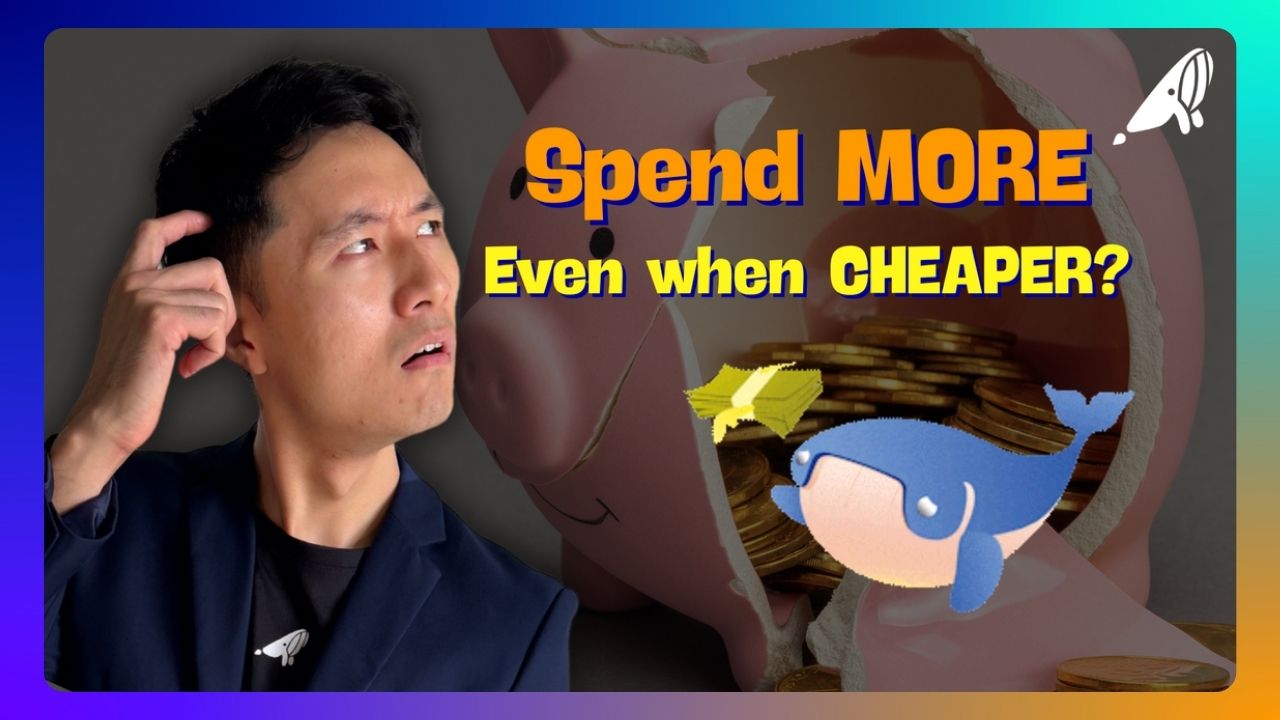
This article is a companion to the video below, where I explain this idea in more depth using simple metaphors and lived examples. If you prefer watching, the video will add more context and nuance.
Why a money habit often feels automatic
A money habit rarely feels like a deliberate decision.
Instead, many money habits operate automatically, especially under stress or time pressure. This is because money behaviour usually begins forming long before adulthood.
Growing up, we absorb what money feels like in our environment. We observe how spending shows up on ordinary days, what saving represents emotionally, and what situations create tension or safety.
These lessons are not taught formally. They come from everyday life. Repeated patterns, casual comments, and situations that quietly become normal.
Over time, these absorbed experiences form a baseline. That baseline strongly influences how a money habit shows up later in life.
Are “bad money habits” really the issue?
The phrase bad money habits is common, but it often creates more judgement than clarity.
When a money habit is labelled as bad, it frames the issue as a personal failure rather than a learned pattern. Judgement tends to trigger resistance instead of reflection.
Most people do not change a money habit because they feel criticised. Change happens when something finally makes sense.
This is why advice alone often fails. Advice assumes choice. Absorption usually came first.
A
Adulthood is choosing which money habits stay normal
Adulthood does not require rejecting your past or blaming your parents.
It is about selection.
As adults, we begin to notice which money habits feel normal to us. From there, we can decide which habits still fit our current life and which ones may no longer serve us.
This process is gradual. It unfolds through awareness, not force.
Why environment shapes money habit more than discipline
Many discussions about money habits focus heavily on willpower.
In reality, environment plays a much larger role. A money habit is shaped by what feels easy, what feels rare, and what feels socially normal.
If spending is frictionless and saving feels invisible, one behaviour will naturally happen more often than the other.
This is not a personal weakness. It is design.
Let’s take a good habit like expense tracking for example.
Imagine this. If from young, your parents forced you to track your expenses every day. And then the friends around you also do the same. After every meal, every bubble tea, everyone whip out your phones to clock your expenses.
You will naturally do it too!
That is why if you are serious about your monies, then you need peer support! To make it easier, my team have developed a free expense tracking tool, Buddy, to get the job done.
Gone are the days of using excel or traditional expense tracker that makes you keep so many blanks. Now, a simple one-liner text or photo of the receipt will get the job done.
Check out Buddy here: Click Me!
How parents influence a child’s money habit
For parents, money habits carry an additional layer of impact.
Children do not primarily absorb lectures about money. They absorb tone, emotional reactions, and everyday behaviour.
A child’s money habit is often shaped by what they observe, not what they are told.
Presence matters more than perfection. Awareness matters more than enforcement.
Awareness before change
If there is one idea worth holding onto, it is this:
You didn’t choose what you absorbed. So you don’t need to judge it.
Adulthood offers something quietly powerful, the ability to choose what continues to feel normal from here on.
There is no rush. No shame. No pressure to fix everything immediately.
Just clarity.
And given enough time, clarity tends to change more than force ever could.
Watch the full video
This article reflects the full video Money Habits Are Absorbed, Not Chosen, where I share personal stories and real-life observations to deepen these ideas.
If this perspective resonates, you’re welcome to continue the conversation by leaving a comment on the video or subscribing to the channel.
Jia Xuan is a money coach at GoodWhale and a licensed financial advisor in Singapore. His work focuses on awareness before change, helping individuals especially youths and young parents build healthier relationships with money over time.








Leave a Reply