

How to Stop Impulse Buying and Build Better Habits
We’ve all been there: scrolling through an online store, adding items to the cart, and before you know it, you’ve made an unplanned purchase. Impulse buying can feel like a quick fix, driven by the desire to treat yourself or keep up with trends. You may convince yourself that you deserve it or don’t want to feel left out. However, this often leads to regret and unnecessary spending. If you’re wondering how to stop impulse buying, the key is awareness, self-control, and practical strategies that help you make thoughtful, intentional decisions.

Understanding Impulse Buying
Impulse buying is an unplanned purchase that occurs without much thought or consideration. Often triggered by emotions—such as the belief that you deserve something or the fear of missing out (FOMO)—these purchases can be small, like a pair of shoes, or big, like a new tech gadget. The feeling of instant gratification may seem rewarding in the moment, but it can derail your budget and savings goals.
How to Stop Impulse Buying: Key Strategies
1. Recognize the Triggers 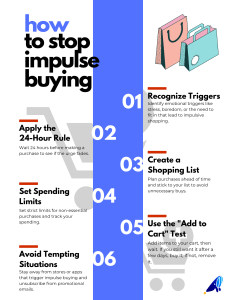
The first step to overcoming impulse buying is identifying the triggers. Are you shopping when you’re stressed, bored, or feeling down? Do you often buy things because you feel you deserve them or don’t want to feel left out? These emotional states can lead to impulsive spending as a way to cope or fit in. By recognizing these moments, you can take steps to prevent impulse purchases.
2. Implement the 24-Hour Rule
When you feel the urge to make an impulse purchase, apply the 24-hour rule. Pause for a day before buying anything. This cooling-off period allows you to reflect on whether the item is truly necessary or just a fleeting desire. Often, you’ll find that the urge fades away after waiting a day.
3. Create a Shopping List and Stick to It
One effective strategy for how to stop impulse buying is planning your purchases ahead of time. Make a shopping list and commit to buying only the items you need. Avoid browsing stores without a clear plan. This can help you stay focused on your goals and prevent the temptation to buy things you don’t need.
4. Set Spending Limits
To gain more control over your finances, set strict limits for non-essential spending. Track your expenses and create a budget that includes a category for “fun” purchases. When you hit your spending limit, stop. Knowing your limits ahead of time helps you stay within your budget and avoid overspending.
5. Use the “Add to Cart” Test
When shopping online, use the “add to cart” method. If you’re unsure whether to purchase an item, add it to your cart and leave it there for a while. If you still feel the urge to buy it after a few days, then go ahead. If you forget about it or realize you don’t need it, then remove it from the cart. This strategy helps you separate impulse from need.
6. Avoid Tempting Situations
If you find that certain stores or websites frequently trigger impulse buys, it might be best to avoid them altogether. Unsubscribe from email lists that promote sales or discounts, and consider deleting shopping apps from your phone. The less access you have to temptation, the easier it will be to curb impulsive shopping habits.
Final Thoughts
Impulse buying can be a challenge, but with mindful shopping habits, you can take control of your spending. By recognizing your triggers—whether they’re emotional desires like feeling deserving or not wanting to miss out—and sticking to a plan, you can avoid unnecessary purchases and stay on track with your financial goals. Remember, the key to how to stop impulse buying is self-awareness and discipline—take it one step at a time, and you’ll see improvement.










[…] Read: How to Stop Impulse Buying and Take Control of Spending […]
[…] without guilt, overdrafts, or guesswork. It’s one of the few methods that works well for impulsive spenders because it limits spending before temptation even […]