

Budgeting in Tough Times: The Habit That Changed How I Handle My Money
When money feels tight, budgeting can feel like an uphill climb.
You already know you should save. You’ve probably even tried a spreadsheet or a budgeting app before. But somehow, the habit doesn’t stick. Bills keep coming, life keeps happening, and by the end of the month, you’re left wondering, Where did it all go?
I get it. I’ve been there too.
Recently, I came across some practical budgeting advice from The Woke Salaryman, not the usual “cut everything fun” type, but a more realistic approach. The message was simple: focus on what you can actually keep up with, even in challenging seasons, and make the habit of paying attention to your money part of your everyday life.
Why budgeting feels impossible when life gets hard
The hardest part about budgeting in a rough season isn’t math. It’s motivation.
When every dollar already feels spoken for, it’s easy to think, “What’s the point?” But the truth is, this is exactly when budgeting matters most.
Here’s why:
-
Small leaks sink the ship faster when income is tight
A little overspending on food delivery or “small treats” can eat up your emergency cushion before you notice. -
Your stress level impacts your spending
When you’re worried, comfort spending can creep in, small indulgences here and there that feel harmless until the total surprises you. -
You can’t prepare for what you don’t measure
Without tracking your actual spending, you’re guessing. And guessing rarely ends well for your savings.
My turning point: focus on awareness, not restriction
In the past, I approached budgeting like a crash diet, cutting so hard that it felt miserable. I’d burn out within weeks and go right back to old habits.
The shift came when I stopped aiming for perfection and started aiming for awareness. Once I actually saw where my money was going, I could make small, sustainable changes without feeling deprived.
It’s not glamorous, but it works:
-
You start spotting patterns like how “just one coffee” every day adds up to a hefty monthly total.
-
You become more intentional saying yes to things you truly value and no to the ones you don’t.
-
You make better plans because now you know exactly how much you need for your real-life expenses.
How GoodWhale Buddy made awareness easy for me
Here’s the problem: tracking can be tedious.
Spreadsheets? Too much setup.
Most apps? Too many taps.
That’s why GoodWhale Buddy worked for me, it fits into daily life without disrupting it.
You can:
-
Text your expenses like you’re chatting (“Lunch 8.50” or “Laksa 6”)
-
Send a voice note when you’re busy or on the move
-
Snap a photo of your receipt and let it log for you
-
Upload your bank statement for auto-tracking and instant summaries
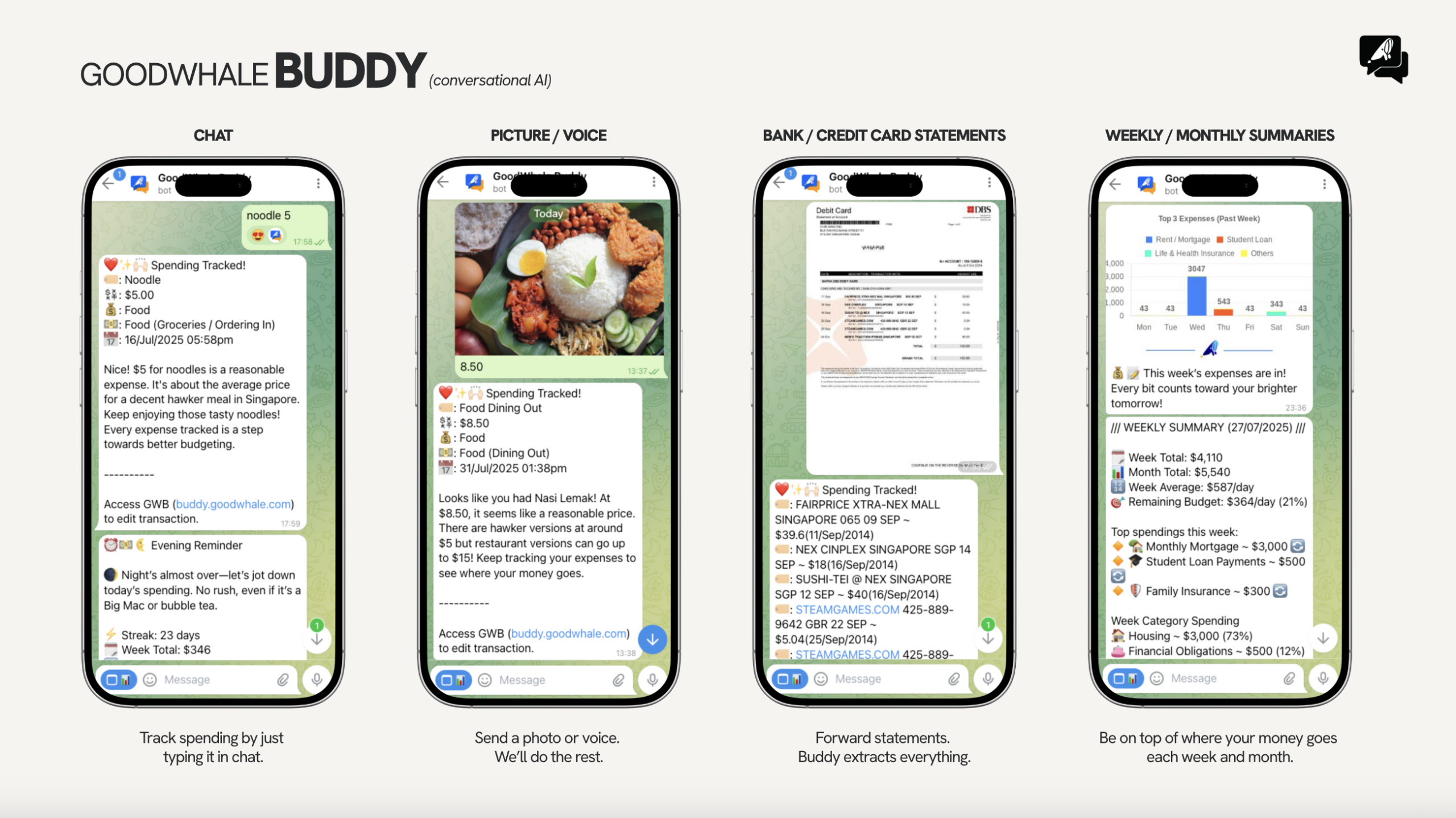
No guilt trips. No complex dashboards. Just a clear picture of your spending without the mental load.
Why this habit matters, especially in tough times
Budgeting isn’t about showing the world you’re “good with money.” It’s about giving yourself the freedom to handle unexpected costs without panic.
And here’s the thing, once you can consistently track and review your expenses, saving becomes a byproduct. You naturally spend less on things that don’t matter to you and more on the things that do.
So, if you’re in a season where every peso counts, don’t wait until it feels comfortable to start budgeting. Start now, start small, and make it as effortless as possible.
My takeaway?
In tough times, your budget isn’t a restriction, it’s your lifeline. And when you pair realistic money habits with a tool that keeps you consistent, like GoodWhale Buddy, you’re not just surviving you’re setting the stage for long-term stability.
Try tracking for just one week. You might be surprised how much clarity you gain, and how much control you actually have. The best part? It’s available right where you already chat, on messaging platforms like Line, Telegram and WhatsApp.










Leave a Reply