

Over the past few weeks, the Chinese market has dominated headlines. China’s economy has faced significant challenges following the COVID-19 pandemic. With the Evergrande crisis and regulatory tightening, the economy has been on a downward trend.
In an effort to revive the economy, China’s top economic planner, the National Development and Reform Commission (NDRC), announced its latest stimulus on September 25, 2024. The market reacted wildly to this news, but the surge was short-lived. While some investors profited, many others suffered significant losses.
In this article, you’ll learn about:
- The crises that many Chinese citizens are facing
- 5 biggest lessons to ensure you never face this situation
- GoodWhale’s take on how you can systematically grow your money
The Market Frenzy and Its Aftermath
Following the stimulus announcement, the market soared briefly. Influential figures on social media platforms touted this as a once-in-a-lifetime opportunity. Some prominent voices publicly predicted that the Chinese market would skyrocket after the Golden Week Holiday, urging their followers to go “All-In” and making bold promises if their predictions failed.

Source: YouTube (China Observer)
This hype led many individuals to double down on their investments, some even using their life savings or borrowing money to invest more heavily. Unfortunately, when the market didn’t perform as expected, these investors faced significant losses. Without proper risk management and sufficient investing knowledge, many found themselves in dire situations, seeking explanations and expressing regret.
As responsible individuals, it’s crucial to internalize these 5 lessons to avoid falling prey to similar situations.
Lesson 1: Don’t Follow Influencers Blindly
Just because someone has a massive following doesn’t mean their advice is sound. Influencers often make a living from views and sales, using persuasive marketing tactics to capture your attention. While there’s nothing wrong with following influencers who act ethically and responsibly, be wary of those who exploit the vulnerability of their audience for personal gain.
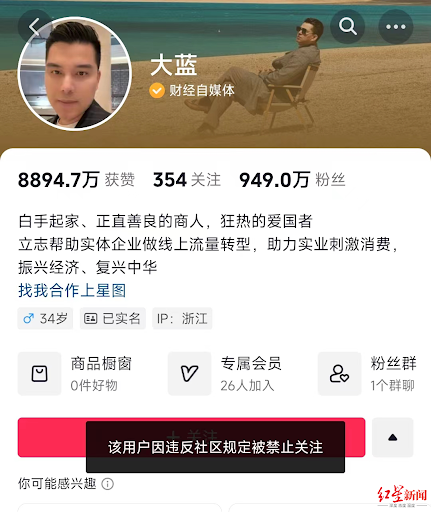
Source: Douyin
Always remember:
- Conduct your own research. Don’t believe everything you hear without verifying the information.
- Understand your own financial situation. Generic advice doesn’t account for your personal circumstances.
- Develop a critical mindset. Challenge the information presented to you rather than accepting it at face value.
Lesson 2: Avoid Going “All-In”
Going “All-In” is akin to gambling and is one of the worst investment behaviors. While the allure of doubling your money is tempting, the risk of losing everything is significantly higher. Successful investors understand the importance of risk management and diversification.

Consider the following:
- Never invest money you can’t afford to lose.
- Diversify your investments. Spread your funds across different assets to mitigate risk.
- Prioritize financial responsibilities. Ensure you have sufficient savings for emergencies before investing.
Lesson 3: Use Leverage Wisely
Leverage, or borrowing money to invest, can amplify gains but also magnify losses. It should be used cautiously and only when it makes financial sense.
Before leveraging:
- Invest, don’t splurge. Use borrowed funds for investments that are likely to appreciate.
- Assess interest rates. Ensure the cost of borrowing is low.
- Calculate returns. The investment’s growth rate should exceed the interest rate.
- Manage repayments. Monthly interest payments should be comfortably within your budget.
If these conditions aren’t met, it’s advisable not to borrow money for investments.
Lesson 4: Understand Paper Losses vs. Realized Losses
Experiencing a drop in your investment’s value can be alarming, but it’s important to distinguish between paper losses and realized losses.
- Paper Loss: An unrealized loss where the investment’s value has decreased, but you haven’t sold it yet.
- Realized Loss: A loss that occurs when you sell the investment at a lower price than you purchased it.
Markets fluctuate, and holding onto quality investments can allow time for recovery. Selling in a panic can lock in losses that might have been temporary.
Lesson 5: Learn from Mistakes, Don’t Shy Away
Facing losses can be discouraging, especially for first-time investors. However, abandoning investing altogether can hinder your financial growth.
Consider this:
- Identify what went wrong. Understanding your mistakes is the first step to improvement.
- Educate yourself. Increase your financial literacy to make better decisions in the future.
- Stay engaged. Regularly monitor your investments and stay informed about market trends.
Saving money is important, but relying solely on savings can leave you vulnerable to inflation. Investing wisely helps grow your wealth and achieve long-term financial goals.
GoodWhale’s Take
The stock market can be a platform for significant wealth growth when approached responsibly. At GoodWhale, we believe in:
- Long-term investing. Focus on assets with strong fundamentals and growth potential.
- Financial literacy. Everyone should have access to financial education to make informed decisions.
- Avoiding FOMO. Don’t let fear of missing out drive your investment choices.
Investing is a continuous journey. It’s about consistently growing your portfolio over time, not just securing a quick win.
Invest in Broad Market Indexes
If you’re looking to grow your wealth steadily:
- Consider broad market indexes. These represent top companies and offer diversification.
- Invest consistently. Regular contributions can yield compounded returns over time.
- Stay the course. Focus on long-term growth rather than short-term market fluctuations.
By applying these 5 lessons, you’ll become a more resilient investor, better equipped to navigate market volatility.
At GoodWhale, our take for navigating this uncertainty is simple—stay disciplined and avoid being swayed by short-term market movements. The key is to maintain a consistent investment strategy, whether through DCA or other long-term approaches, and to focus on the fundamentals of the companies you’re investing in.
At GoodWhale, we’re here to help you make informed investment decisions. Stay tuned for more insights from our upcoming Wealth Pulse sessions, where we continue to cover the latest market news and trends.
Click the banner below to claim your 1-months complimentary weekly Wealth Pulse Live sessions!







Leave a Reply