
It was an honor to participate in a dialogue with Singapore’s Minister of Education, Mr. Chan Chun Sing, to discuss generative artificial intelligence (Gen AI) on the education landscape in Singapore.

Picture with Minster of Education, Mr. Chan Chun Sing
As Goodwhale sees ourselves as a group of educators and technologists that aims to make financial literacy a human right and visioning a world where people can be a better version of themselves without monetary constraints, this dialogue came in timely as we see so much innovations in just a short span of time!
While some of the discussed topics were confidential, here are my 10 key insights of how AI influences education and the skills that may be needed to thrive in this AI-driven world.
1. AI’s Strengths and Limitations
AI is a powerful tool capable of analyzing vast amounts of data, identifying patterns, and providing probabilistic insights. However, it operates within the confines of known knowledge. For example, while AI can summarize the history of inflation theories, it cannot inherently propose innovative solutions to manage inflation in unique contexts.
AI is an enabler, not a creator. Its value lies in helping us process information faster, but true innovation still requires human creativity.
2. Education Must Evolve Beyond Memorization
As an individual, I never liked to memorize for the sake of memorizing. That said, traditional education methods focused on rote memorization and regurgitating answers are no longer sufficient. A key challenge lies in shifting the focus from merely “answering yesterday’s questions with yesterday’s answers” to equipping students with the ability to think critically and creatively.
For example, How many iterations do we have when it comes to arranging 5 coloured balls? A problem like this can have varying answers depending on whether the arrangement is linear, two-dimensional, or three-dimensional. The critical skill isn’t finding an answer—it’s questioning the problem’s assumptions.
3. Focus on Questions, Not Just Answers
In the age of AI, asking the right questions is more important than knowing the answers. Framing sharp, meaningful questions drives exploration and innovation.
When using AI tools like ChatGPT, the quality of output often depends on the quality of the prompt. This highlights the importance of developing strong questioning skills over simple fact-finding.
4. High-Touch and High-Trust Skills Are Irreplaceable
Certain human skills—such as empathy, emotional intelligence, and building trust—cannot be replaced by AI (yet). How many people truly “trust” AI when it comes to making BIG decisions in life? These “high-touch and high-trust” roles are critical in professions like healthcare, counseling, and strategic planning.
Example: While AI can troubleshoot code effectively, it cannot replace the nuanced decision-making of a financial advisor who understands a client’s emotional and personal context.
5. Lifelong Learning and Resilience Are Key
In a rapidly changing world, the ability to keep learning, adapting, and creating is more critical than ever. While many only sees education as part of their life for their first 15 years, it is definitely not the case to stay relevant. To stay relevant and thrive for the next 50 years, we definitely need to keep learning,
“I don’t know what I don’t know.” This phrase stuck with me ever since my friend introduced this from a segment by Adam Grant’s Think Again.
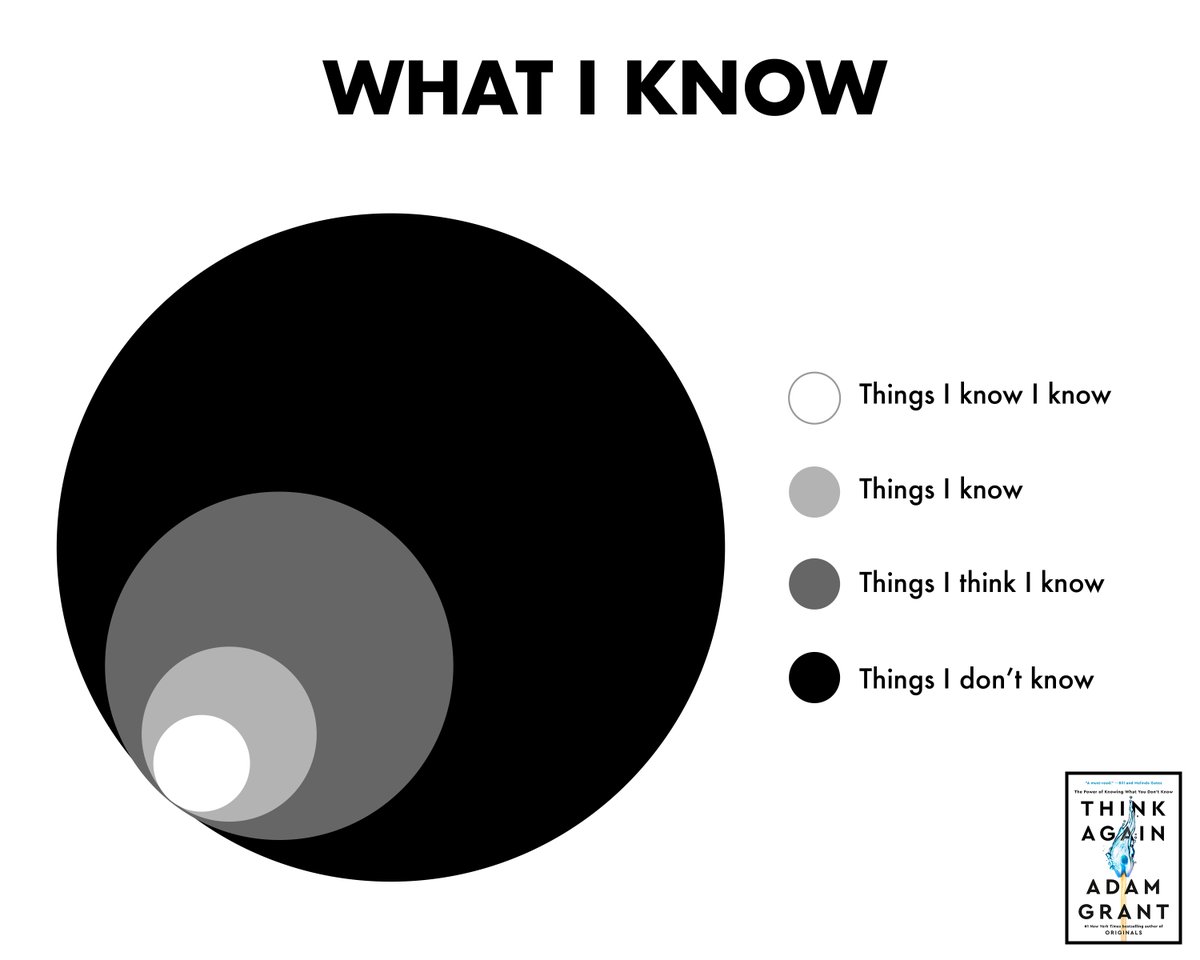
Source: Adam Grant
This inspired me to look things from a different perspective and never underestimate the importance of curiosity.
This meant that what I’ve experienced in my education journey is not to get good grades (although that helps), but to create pockets of curiosities which allows one to explore further one day.
I must be curious enough to know my unique strengths and continue exploring independently after formal schooling to stay competitive and fulfilled in the long term.
6. The Value of Collaboration and Diverse Thinking
Success doesn’t lie in being a jack of all trades but in collaborating effectively with people from different disciplines. Multidisciplinary teams, where members bring diverse perspectives, are better equipped to tackle complex problems.
Universities encouraging cross-disciplinary projects—such as pairing engineering students with social science majors—help cultivate this valuable skill.
In life, this is much the case as we leverage on each other, we can think of more ideas and solution as compared to the brain power of 1.
7. AI as a Tool, Not a Replacement
AI can assist in solving problems, but true value comes from exploring unconventional approaches and breaking free from traditional thinking. The ability to solve problems creatively and challenge assumptions remains a uniquely human trait.
An example would be the Yom Kippur War, back in 1973, and how a small Israeli tank unit in the Golan Heights against overwhelming Syrian forces. This showcased the importance of out-of-the-box thinking over sheer logic.
8. Customization in Education
AI has the potential to transform education by enabling personalized learning paths. Adaptive systems can assess students’ abilities in real-time and adjust the content to their level.
For example, Adaptive learning systems, already used in parts of India and China, customize content like a game, helping students progress at their own pace while identifying gaps in knowledge.
While customization is key in learning, it should not discount the fact that we are social creatures and we still have to learn from peers as well.
9. Measuring Success Differently
Success in the future won’t be about achieving perfect scores but about developing unique strengths, curiosity, and the ability to learn independently.
Instead of focusing solely on standardized tests, as a parent myself, I ought to encourage students to explore and ask, “What makes me special?” and “What have I learned on my own?”
Change must start from within. While teachers or the education system aims to nudge us, the initiative is what makes learning lifelong and enjoyable. Nothing good comes from being forced. Neither does doing things because others told you to do. This is why in Goodwhale, I truly believe that awareness is one of the biggest hurdle many has when it comes to financial literacy.
That’s why our board game, Whale of Fortune, aims to help more people become more aware of their relationship with money and how their actions (or inactions) has consequences they have to bear.
10. Knowledge Isn’t Enough—Creation Matters
In a world where information is commoditized, the ability to create new insights and solutions will be the ultimate differentiator. The focus should shift from merely knowing facts to developing the skills needed to generate new value propositions.
For example: Companies like Shopee thrive not by replicating existing models but by creating unique strategies, like their localisation strategy, that tailored to new markets.
What will happen in the future?
As AI continues to reshape the world, education must pivot from merely imparting knowledge to fostering creativity, curiosity, and adaptability. By emphasizing the ability to ask questions, collaborate, and create, we can prepare individuals to not just survive, but thrive in a future where AI is a tool, not a replacement.
The future belongs to those who can think critically, adapt to change, and create value in ways machines cannot. It’s time to rethink what education means in an AI-driven era.
Know yourself better
Externally, things are moving so fast. It is often the case where we are caught up in the moment and lose track of our goals and priorities.
I see our board game, Whale of Fortune, being a good enabler for individuals to explore themselves through a life simulation from 20s to 60s. While the board game focuses on money, it goes beyond that as individuals reflect on their actions.
It challenges players to explore their strategies on how they can utilize ALL sources of resources to reach financial freedom, a key to having a good retirement and not have money anxiety.
Financial wellness is not often emphasized in the workforce, yet having financial stress affects employee productivity, engagemnet and overall well-being. For organizational success, Adam Markel shared how this plays a part.

Source: LinkedIn
If you are interested to organise a session with your teams, do reach out to me at [email protected] for more information, or to secure a slot!








Leave a Reply